|
|
|||
|
© 2010 Atocha Treasure Company LLC All Rights Reserved |
|||
|
"The Dreamweaver,"
|
|||
|
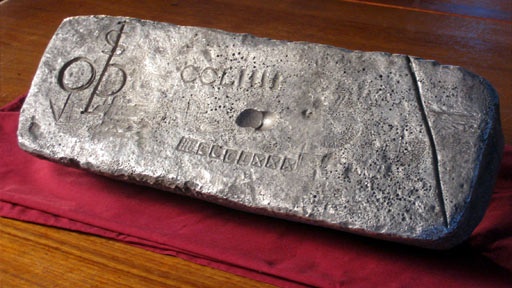
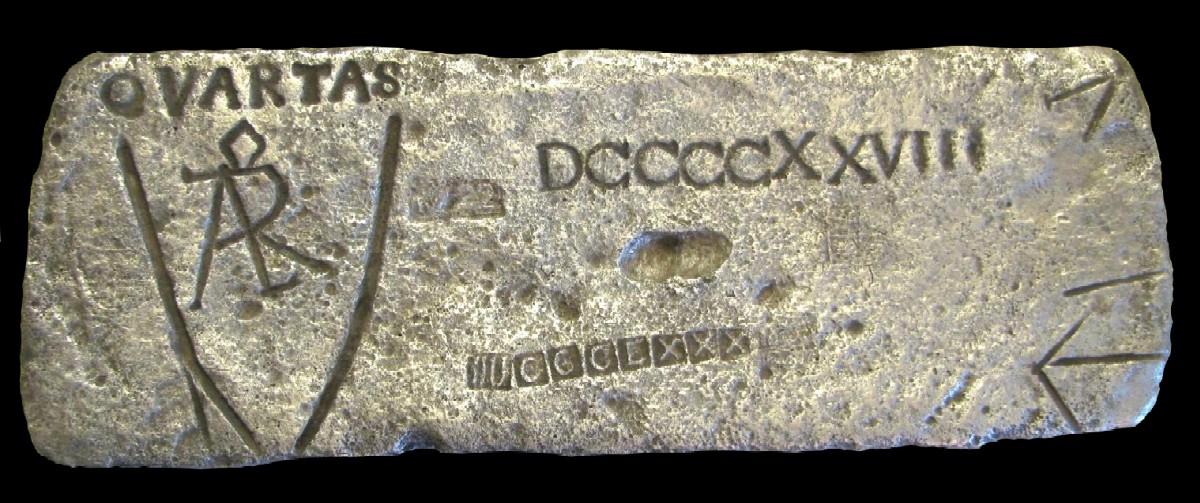
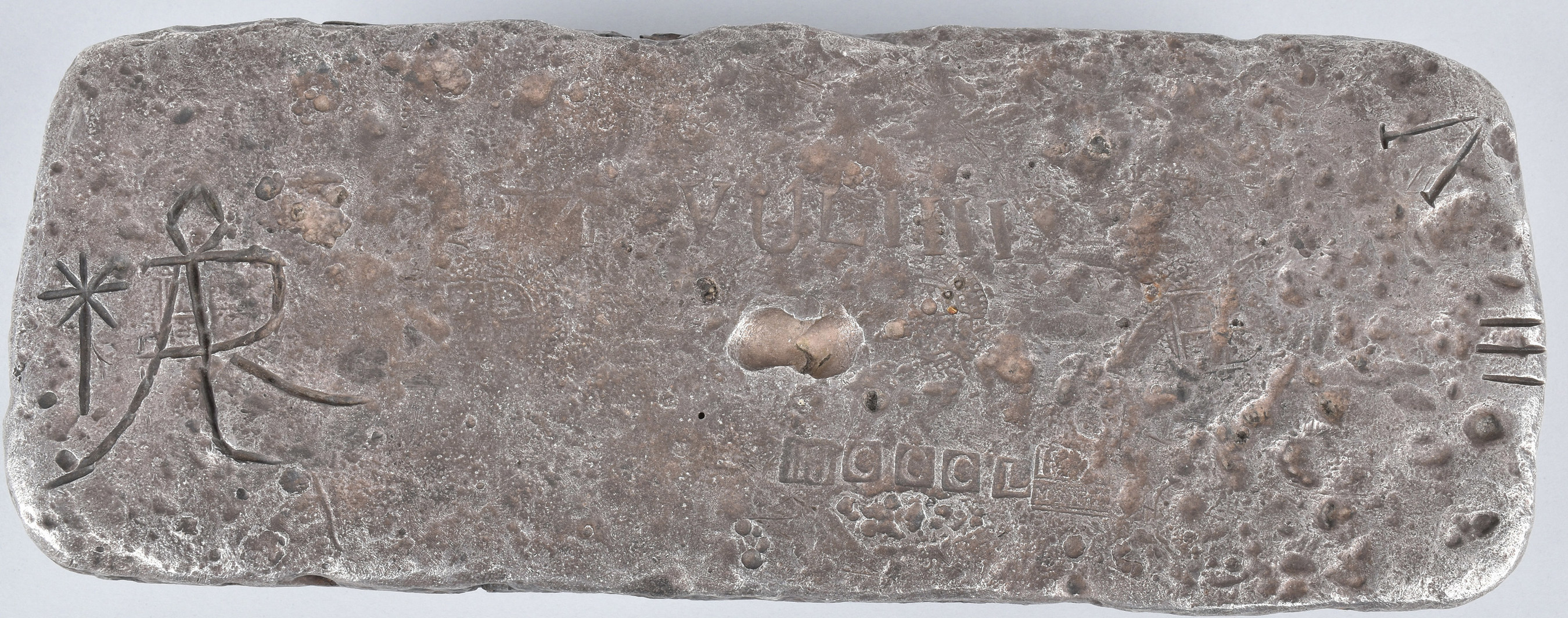
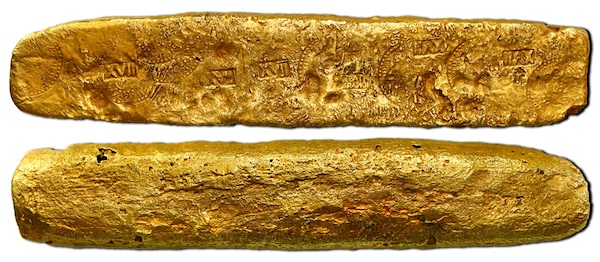
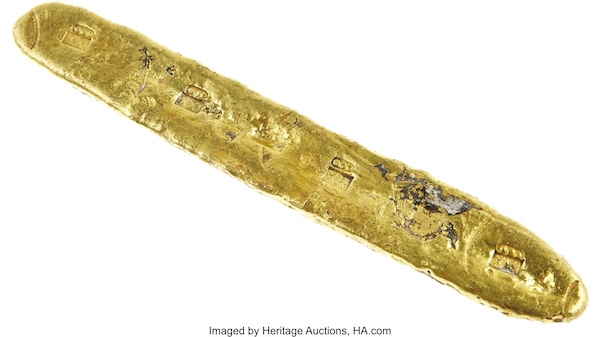
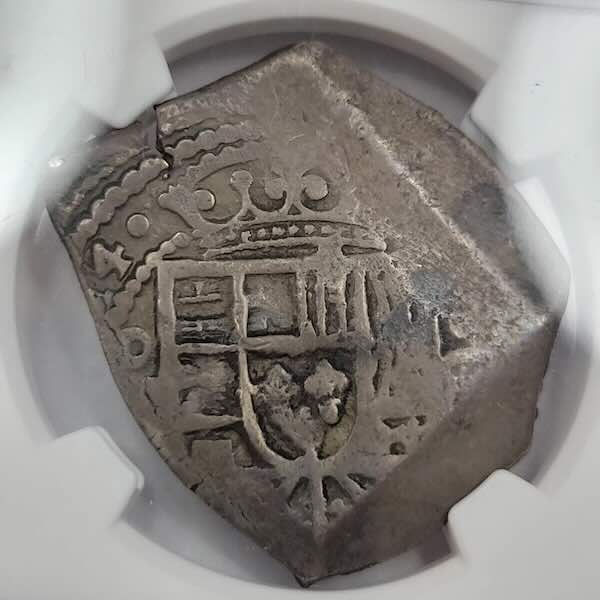
It was an occasion for celebration Brightly colored flags whipped briskly in the breeze, while booming ceremonial cannon fire rang in the ears of the excited citizens of Havana as they crowded the docks to wave good-bye. The annual Spanish treasure fleet had hauled anchors and was proceeding past El Morro, the grim stone fortress that guarded the entrance to the harbor. It was September 4, 1622, and well into the hurricane season. The sailing had been delayed for weeks at Portobello as more than 100,000 silver coins and over 1,000 silver ingots were loaded on board. Another delay occurred at Cartagena where more silver coins and bars --as well as over 20,000 pesos in gold bars and discs-- were logged into the manifest it was August 22 when the fleet finally reached the docks at Havana. last minute cargoes of copper slabs, baled indigo, tobacco, and more private treasure found room aboard the galleons which were already seriously overloaded. |
|||
|
|
Pilots of the galleons had generally disagreed on a sailing date, feeling that the danger of a hurricane was too great to risk losing such a huge treasure now carried by the flotilla. The final decision was made by the fleet commander the Marquis of Cadereita. He had considered the conjunction of the moon, which greatly affected the weather. This was the time of the new moon when the Earth, sun, and moon were in ‘conjunction’. If bad weather prevailed, he would delay sailing. But on September 4, the day before the conjunction occurred, the weather looked promising. His decision was to sail. |
||
| There was
another urgency to sail as well. The King of Spain was, as always, in
desperate need of the gold and silver By 1622 the financial straits of Spain
were stretched to the limits. The Fugger family of Augsburg had financed
Spanish wars and religious expansion but in 1607 a suspension of debt
payment by Philip III drove the Fuggers out of royal finance. In l621 Philip
III died, and his son Philip IV became king. The thirty-year religious war
between Protestants and Catholics in the Holy Roman Empire had already
begun, and Philip IV needed the
galleon treasures to support Spain’s efforts in this war, The fortunes of Spain literally rose and fell
with the flow of precious metals from her overseas empire. It took more than an hour for the fleet of 28 ships to clear the harbor. Once they had formed into a sailing order, the capitana led the fleet off on a north-by-northwest course that would carry them to the Gulf Stream. Once there the current would give them an additional two knots, which would boost them homeward By sunset they had reached the center of the Gulf Stream, but the weather had changed. The deep red sunset and a bank of clouds that began to pile up to the southeast gave the pilots their first uneasiness. Unknown to them a hurricane had formed and was rapidly moving along the Leeward Islands. |
|||
|
As darkness descended upon the fleet, topmast lights were lit as ships tried to maintain position. But now the gusts of wind began to toss the ships about. Long, undulating seas made it difficult to maintain their course. Before morning the winds had increased and were now whipping the tops of the waves into a white froth. The almiranta of the fleet, Nuestra Senora de Atocha, positioned in the rear of the flotilla, had to reduce sail by morning in order to weather the storm that was now upon them. Deck cargo had to be secured and cargo hatches firmly lashed down as the day darkened and the weather worsened. By noontime the winds had shifted to the east and reached gale force. No longer could they see other ships in the convoy. The mainsail was lowered and secured, and the foresail alone kept her bow into the wind. |
|
||
| Now the sea boiled around the galleon, her yards disappearing into the green water that began to wash over her waist. Great seas swept all around, and flying spray obscured the horizon. Atocha plunged into each wave, lifted up on a crest to roll wildly into the next. No longer could the galleon be steered. With the tiller lashed in place, the whipstaff disconnected, each huge wave sent shudders through the Atocha hull. Below decks was turmoil. Olive jars filled with water or oil were sent crashing about. Passengers and crew alike suffered wholesale seasickness, holding onto anything solid. Now they were at the mercy of the sea. The struggle to stay afloat went on, but only thoughts of survival put seamen through the motions of working the ship. The winds had moved around to the northeast, and now the fleet was being driven relentlessly towards the dreaded Florida reefs. | |||
|
|
By first light of dawn on Tuesday, September 6, the Atocha had reached the shallows near the deadly coral rocks. Her stream anchor had been deployed during the night, and now as it struck bottom, the two main bow anchors were dropped in an effort to keep the galleon from being driven onto the dragons teeth. Fifteen foot waves had carried away the foremast and rudder, and now her bow carried the brunt of each wave. The anchor lines, stretched tight as a bowstring, soon snapped with a loud report, and Atocha became part of the mountainous waves breaking on the reefs. Captain Bernardino de Lugo, gunnery captain aboard Atocha’s sister ship, the Santa Margarita, was able to see Atocha “rise up, strike a reef, and sink shortly thereafter.” The Margarita soon afterwards parted her own anchor lines and was dashed against the reefs four miles away. |
||
|
By a twist of fate, the capitana and nineteen of the ships in the fleet were driven southward and passed west of the Dry Tortugas into calmer waters. One vessel, Nuestrc, Señora de Ia Consolación, was lost in deep water. One of the larger naos, El Rosario, was driven onto the reefs near Loggerhead Key in the Tortugas. A patache sank nearby in front of Loggerhead Key, and a small Cuban coast guard vessel sank near the Marquesas Keys, A morning calm found debris, floating trunks, barrels, masts, and a few survivors. Of the Atocha, sunk in 55 feet of water, only her mizzenmast protruded above water. To it clung five desperate souls, thankful to have survived. One of the merchant vessels, the Santa Cruz, had weathered the hurricane and, now loaded with 68 survivors of the Margarita, approached the sunken Atocha. The five men --a seaman, two apprentices, and two black slaves-- were taken aboard the Santa Cruz. All trapped below decks, 260 souls were lost aboard the Atocha. The Margarita had lost 143 as her hull disintegrated against a sand bar. When the news of the disaster reached Havana, Gaspar de Vargas was commissioned to locate and salvage the sunken galleons. Within a week he had outfitted five vessels and sailed for the area near “the last key of the Matecumbes.” |
|||
|
He soon located the mizzenmast of the Atocha, but was unable to retrieve the treasure from her hold because the hatches were so securely fastened. He recovered two small bronze cannon from her stern castle, buoyed the wreck site, and then turned his attention to locating the Margarita. He searched in vain for any visible signs of the Margarita, then finding none, he sailed westward towards the Tortugas On the reefs of Loggerhead Key de Vargas found the Rosario in ten feet of water, her keel broken and badly holed. Her crew and passengers were huddled on Loggerhead, along with the survivors of the pa/ache which sank nearby. He brought them aboard his salvage vessels, then went about the task of salvaging the treasure front El Rosario The hull was burned to the waterline, and the one million pesos in silver bars and coins were recovered. Just as the recovery was completed, a second hurricane --more powerful than the first-- swept over the area- The salvage vessels were barely able to stay afloat, protected somewhat by Loggerhead Key. The treasure and survivors were taken to Havana, and preparations were made to return to Atocha with explosives. |
|
||
|
Unknown to Gaspar de Vargas, the second hurricane had separated the upper deck structure of the Atocha from the hull and sent it dancing over ten miles across the waves, strewing the bottom along the way with coins, gold bars, jewelry, and artifacts. The hull --nailed to the bottom with almost forty tons of silver, fifteen tons of copper ingots, and sixty tons of ballast stones-remained in deep water When the salvage ships reached the Matecumbes they could find no trace of the A tocha The buoys were gone, as was the mizzenmast. De Vargas and his men dragged the area for weeks without success, They also could find no trace of Santa Margarita By February of 1623 the Marquis de Cadereita sailed to the Matecumbes to take personal charge of the salvage operation. He was under great pressure from Philip IV to recover the treasure, and he thought that his presence might inspire the team of salvage divers to work even harder. They named the last of the Matecumbes “Marquesa Key” after him. But the Atocha still eluded them. For several months they would row four hours to the potential site, drag the area for several more hours, then return --exhausted-- to their base on the southwestern tip of Marquesa Key. Without a trace to show for their efforts, they returned to Havana. The site of Nuestra Señora de Atocha slipped into archival history. A history of galleons with manifests of gold and silver lost on the wicked reefs of Florida, waiting for a modem day salvager to recover them. |
|||
|
A SAILOR’S PRAYER A stout Ship And loyal Crew A strong Wind The Sea and You 0 Lord To Guide us. Amen.
The SANTA MARGARITA Another account of this galleon’s loss reads: ‘The first of the shipwrecked galleons was the Santa Margarita, smashed against one of the keys of Los Mártires, where it broke into pieces and was destroyed. Few people could be saved and this is the interesting galleon.’’ Together with the Atocha (see below), it remains very interesting indeed to Burr D. Webber, Jr.. whose Continental Exploration Corporation was awarded Exploration Contract #2o on July 18, 1969. The boundaries of this lease cover the region in which Webber is nearly certain both galleons lie. He writes:
Most people think that the Santa Margarita was a large and heavily armed galleon, which was not the case. Her dimensions, which were given on November 28, 1621, when she was approved for a silver galleon, were: 54 codes and 5/12 in length 17 short codes of extreme breadth by the first beam 8 large codes in depth of hold . . .and it seems to be sufficient for a silver galleon. The Santa Margarita carried approximately 25 pieces of artillery, some of bronze which were later recovered. Although sought by both Gaspar de Vargas and Pedro do Ursua, she was not found until 1626 by Francisco Nunez Melian. In order to create an incentive among the slave divers, he agreed to grant freedom to the first diver to locate and recover a bar of silver from the site. A slave diver named Juan Banon did this, and salvage continued through 1630. I have a letter which indicates that the Indians also worked on this site, recovering gold and many reales, before the Spaniards ever located the wreck. I cross-referenced the registered bullion listings on the Margarita against the Nuñez Melian salvage records. As I recall, nearly 144 bars of silver and thousands of pieces of eight were accounted for. Although some 30 bars and cakes of gold were in the register, none were listed as salvaged. Did the Indians recover the unaccounted—for treasure? I don’t know. The total registered treasure aboard the Santa Margarita was 410,000 pesos in gold, silver, copper and tobacco.
NUESTRA SENORA DE ATOCHA The Almiranta took down with her Admiral Pedro Pasquier and nearly her entire crew when she sank. The 6oo-ton Tierra Firme galleon carried over 1,000,000 pesos in registered silver and other treasure, worth at least $2,ooo,ooo today. She was found by the Spanish, as described earlier, and partially salvaged in 1623. |
|||
|
Before work could be concluded the marker buoy on the wreck was carried away in a storm, and the site was never relocated. Shifting sand blanketed the ballast mound, which has probably disappeared from view. There should be at least $1,000,000 in gold and silver today in the ballast of the Atocha, buried under the sand in a wide stretch between two reefs, 30—60 feet deep, within the boundaries of Exploration Contract #20.
Burt Webber’s Continental Exploration Corporation is a dynamic, technically advanced organization. Still young, Webber started his salvage training in 1961 as chief diver on an expedition directed by Art McKee aboard the Amigo on which an eighteenth-century wreck on Banner Reef was excavated. During the next years he explored wrecks in the Caribbean, the Bahamas, and off the Florida Keys on expeditions managed by Gordon S. Patton and Fred Dickson, Jr., of Ocean City, Maryland, Captain Leo Barker of Miami, and others. On another McKee expedition in 1963 he helped raise five old cannons which were sold to all Ocho Rios hotel in Jamaica. He then formed a Jamaica company, Marine Archaeological Research Corporation, Ltd., and charted wrecks along Serrana and San Pedro banks. Webber spent much of 1965 and 1966 in Spain directing a program of research at the Archivo General de Indias and Museo Naval, during which over a thousand documents pertaining to the armadas were located, photocopied, and catalogued by his staff of translators and researchers. Then, fully equipped with information and experience, he formed Continental Exploration Corporation.
The preparations for the assault on the two Spanish galleons have cost already some $200,000. Much of this was spent procuring and testing such sophisticated electronic search devices as Dr. Edgerton’s seismic profiling equipment and the Varian Associates’ V-4937 proton magnetometer. In a search for more sensitive and reliable detection units, a whole new generation of rubidium and cesium magnetometers was checked out. Webber’s 136-foot research motor vessel Revenge is one of the most modern and fully equipped afloat. After purchasing her for $100,000, he spent another $85,000 on specialized search and salvage equipment, including a two-man dry submarine, recompression chamber, deep and shallow diving rigs, air lifts, pave-breakers, and a full range of navigation equipment. His associates include Art McKee, George MacDonald, Jack Haskins, and Kenneth Myers, the president of Sea Borne Electronics Company, whose Varian 4938-G magnetometer located the Endeavour’s cannons. With such a competent management and team, researched information, and advanced equipment, it seems likely that the Continental Exploration Corporation may well have located the Atocha and possibly the Margarita as well-by the time this book goes to press.
|
|||
|
|
|||
|
|
|
||
|
Gold Rush
Off
Cape Cod |
|||
|
|
|||
|
|
|||
|
The Treasure
Diver's Guide
|
|||
|
Pottery Finds From The 1985Atocha Excavation |
|||
| © 2007 Atocha Treasure Company LLC All Rights Reserved | |||
|
|
|
|||||||||||||||||||||||||||||||||||||||||||||||||||||||||||||||||||||||


New Site
http://1622atocha.com